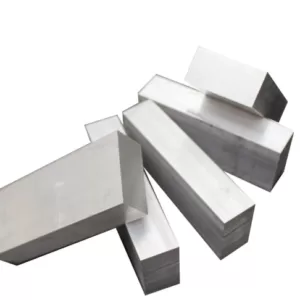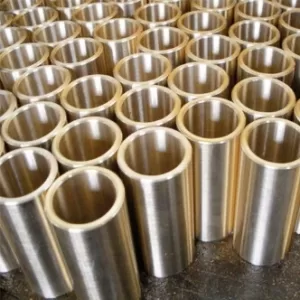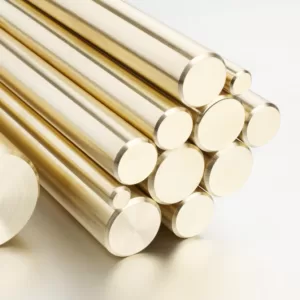
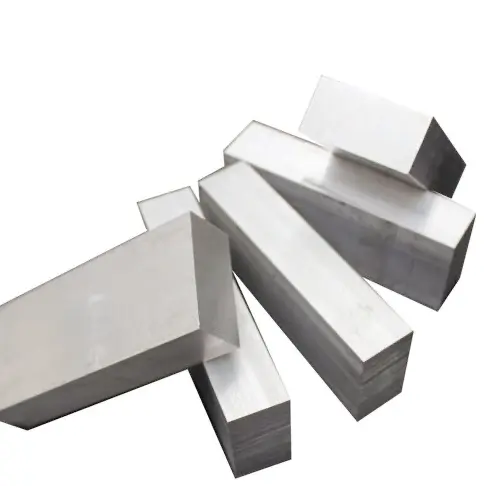
Aluminum products made of aluminum and other alloying elements. Usually it is first processed into casting products, forging products and foils, plates, belts, pipes, rods, profiles, etc., and then made by cold bending, sawing, drilling, assembly, coloring and other processes. The main metal element is aluminum, and some alloying elements are added to improve the performance of aluminum.
Classification of Aluminum Materials
Based on the presence of alloying elements, aluminum materials are divided into pure aluminum and aluminum alloys. Aluminum alloys are further divided into Al-Mn alloys, Al-Cu alloys, Al-Si alloys, and Al-Mg alloys based on alloy series.
Based on the ability for pressure processing, aluminum materials are classified into deformable aluminum and non-deformable aluminum (e.g., cast aluminum).
Based on the ability for heat treatment strengthening, aluminum alloys are divided into non-heat-treatable aluminum and heat-treatable aluminum. Aluminum does not have allotropes, so pure aluminum, aluminum-manganese alloys, aluminum-magnesium alloys, etc., cannot be strengthened by heat treatment. However, alloys like aluminum-copper and aluminum-magnesium-silicon can be strengthened by precipitation hardening during solution heat treatment, termed as heat-treatable aluminum. Those unable to increase strength through precipitation hardening after solution heat treatment are termed non-heat-treatable aluminum.
Methods of Representation and Status Codes
Four-digit system: Implemented since January 1, 1997, in China, this system follows the GB/T16474-1996 standard. For example, industrial pure aluminum includes 1070, 1060, Al-Mn alloys include 3003, and Al-Mg alloys include 5052, 5086, etc.
Four-character system: Used before January 1, 1997, in China, this system aligns with the former Soviet Union’s naming method. Due to chemical composition discrepancies with the international four-digit system, characters were used to maintain compatibility. For example, the chemical composition of the old designation LF21 doesn’t fully match the international four-digit system designation 3003, so it’s represented as 3A21.
Application Characteristics and Aluminum Grades Used in Container Standards
Aluminum forms a dense aluminum oxide passive film on its surface in air and oxidizing aqueous media, providing good corrosion resistance in some oxidative environments. It’s often used in corrosion-resistant container materials.
For media that aren’t highly corrosive but require protection against iron contamination, aluminum offers good corrosion resistance without introducing iron contaminants, making it suitable for anti-iron contamination containers. Other non-ferrous metal containers also prevent iron contamination, but aluminum is the most economical.
Aluminum has a face-centered cubic crystal structure and no allotropic transformation like ferrous steel, allowing it to maintain ductility even at low temperatures. Aluminum containers can withstand temperatures as low as -269°C. However, aluminum-magnesium alloys with high magnesium content may experience stress corrosion sensitivity in certain media. Therefore, aluminum-magnesium alloys with over 3% magnesium should not exceed a design temperature of 65°C.
Aluminum-magnesium-silicon alloys exhibit high strength and good plasticity in the solution heat-treated state, making them suitable for high-strength aluminum alloy containers. Pure aluminum, especially, has very low proportional elongation, making it susceptible to plastic deformation under low loads. Therefore, aluminum containers should be handled with care during use and transportation.
Properties and Uses of Various Aluminum Grades
JIS A.A 1000 Series – Pure Aluminum Series
1060: Used as a conductive material with an IACS guarantee of 61%. For higher strength, 6061 is used.
Applications: Wiring.
1085, 1080, 1070, 1050: Good formability and surface treatment. Best corrosion resistance among aluminum alloys due to high purity but lower strength.
Applications: Daily necessities, aluminum sheets, lighting fixtures, reflectors, decorations, chemical industry containers, heat sinks, welding wires, conductive materials.
1100, 1200: General-purpose aluminum with purity above 99.0%. Appearance slightly whitish after anodizing treatment.
Applications: General articles, heat sinks, bottle caps, printing plates, building materials, heat exchanger components.
Daily use products 2000 series – AL x Cu series
2011: Fast cutting alloy, good machinability, and high strength. However, poor corrosion resistance. When corrosion resistance is required, use the 6062 series.
Applications: Alloy volume shafts, optical components, screws.
2014, 2017, 2024: Contain a large amount of Cu, with poor corrosion resistance but high strength. Can be used as structural materials, and also applicable for forging.
Applications: Aircraft, gears, oil and pressure components, axles.
2117: After solution heat treatment, used as material for hinge pins, an alloy for delaying room temperature aging.
2018, 2218: Forging alloys. Good forgeability and high-temperature strength, hence used for heat-resistant forgings, but with poor corrosion resistance.
Applications: Cylinder heads, pistons, VTR cylinders.
2618: Forging alloy. Excellent high-temperature strength but poor corrosion resistance.
Applications: Pistons, molds for rubber forming, general high-temperature components.
2219: High strength, good low and high-temperature properties, superior weldability, but poor corrosion resistance.
Applications: Low-temperature containers, aerospace machinery.
2025: Forging alloy. Good forgeability and high strength, but poor corrosion resistance.
Applications: Propellers, magnetic drums. 2N01 – Forging alloy. Heat resistant with high strength, but poor corrosion resistance.
3000 series – AL x Mn series
3003, 3203: Approximately 10% higher strength than 1100, with good formability, weldability, and corrosion resistance.
Applications: General articles, heat sinks, cosmetic panels, photocopier drums, ship materials.
3004, 3104: Higher strength than 3003, excellent formability, and good corrosion resistance.
Applications: Aluminum cans, lamp covers, roof panels, colored aluminum sheets.
3005: Approximately 20% higher strength than 3003, with good corrosion resistance.
Applications: Construction materials, colored aluminum sheets.
3105: Slightly higher strength than 3003, with similar characteristics.
Applications: Construction materials, colored aluminum sheets, bottle caps.
4000 series – AL x Si series
4032: Good heat resistance and abrasion resistance, with a low coefficient of thermal expansion.
Applications: Pistons, cylinder heads.
4043: Minimal solidification shrinkage, turns gray upon anodizing with sulfuric acid.
Applications: Welding wires, architectural panels.
5000 series – AL x Mg series
5005: Similar strength to 3003, good workability, weldability, and corrosion resistance.
Applications: Interior and exterior construction, vehicle interiors, ship interiors.
5052: Representative alloy with moderate strength, good corrosion resistance, weldability, and formability. Especially high fatigue strength and excellent resistance to seawater.
Applications: General sheet metal, ships, vehicles, buildings, bottle caps, honeycomb panels.
5652: Restricts impurities in 5052 and suppresses hydrogen peroxide separation. Other characteristics are the same as 5052.
Applications: Hydrogen peroxide containers.
5154: Approximately 20% higher strength than 5052, with similar characteristics.
Applications: Pressure containers.
5254: Restricts impurities in 5154 and suppresses hydrogen peroxide decomposition. Other characteristics are similar to 5154.
Applications: Hydrogen peroxide containers.
5454: Approximately 20% higher strength than 5052, with similar characteristics but better corrosion resistance in harsh environments than 5154.
Applications: Automobile wheels.
5056: Excellent corrosion resistance, suitable for surface decoration with machining. Good anodizing and coloring properties.
Applications: Camera bodies, communication equipment components, zippers.
5082: Similar strength to 5083, with good formability and corrosion resistance.
Applications: Tank covers.
5182: Approximately 5% higher strength than 5082, with similar characteristics.
Applications: Tank covers.
5083: Welding structural alloy. Among practical non-heat-treated alloys, it is the highest strength corrosion-resistant alloy, suitable for welding structures. Excellent seawater resistance and low-temperature properties.
Applications: Ships, vehicles, low-temperature containers, pressure containers.
5086: Higher strength than 5154, a non-heat-treated alloy with excellent seawater resistance for welding structures.
Applications: Ships, pressure containers, magnetic discs. 5N01 – Similar strength to 3003, high brilliance after bright treatment. Good formability and corrosion resistance.
Applications: Kitchenware, cameras, decorations, aluminum sheets. 5N02 – Alloy for hinge pins, with excellent seawater resistance.
6000 Series – AL x Mg x Si Series
6061: A heat-treated corrosion-resistant alloy with very high strength values when treated with T6. However, its weld joint strength is low. Therefore, it is used for bolts, hinges, ships, vehicles, and land structures. Alloy 6N01 is a high-strength extruded alloy with intermediate strength between 6061 and 6063. It exhibits good extrudability, stamping, and quenching characteristics, making it suitable for complex shapes of large thin-walled sections. It offers good corrosion resistance and weldability.
Applications : vehicles, land structures, and ships.
6063: This alloy, representative of extrusion use, has lower strength compared to 6061 but excellent extrudability. It can be used for complex sectional shapes and offers good corrosion resistance and surface treatment properties.
Applications:construction, highway guardrails, fences, vehicles, furniture, household appliances, and decorative items.
6101: A high-strength conductive material with a guaranteed conductivity of 55% IACS.
Applications:electrical wires.
6151: This alloy offers excellent forgeability and good corrosion resistance and surface treatment properties, making it suitable for complex forged products. Applications: machinery and automotive components.
6262: Known for its corrosion resistance and suitability for fast machining, this alloy offers better corrosion resistance and surface treatment properties than 2011 while having the same strength as 6061.
Applications : camera bodies, oxygenator components, brake components, and gas appliance components.
7000 Series – AL x Zn x Mg Series
7072: With a low electrode potential, this alloy is primarily used for corrosion-resistant covering materials and is also suitable for heat exchanger fins.
Applications : aluminum alloy composite panels, covering materials, and heat sinks.
7075: One of the strongest aluminum alloys, but with poor corrosion resistance. Combining it with the covering material of 7072 can improve its corrosion resistance, albeit at a higher cost.
Applications :aerospace components and ski poles.
7003: A welded construction extrusion alloy slightly lower in strength than 7N01 but with good extrudability. It can be used for large thin-walled sections, with properties similar to 7N01.
Applications : vehicle and locomotive wheel rims.