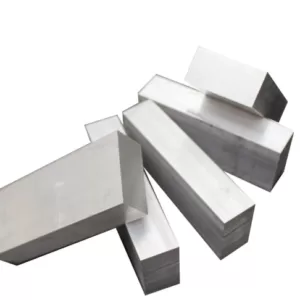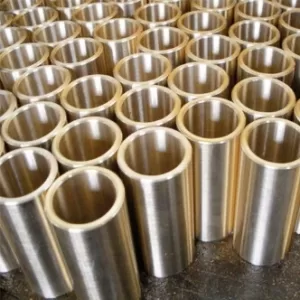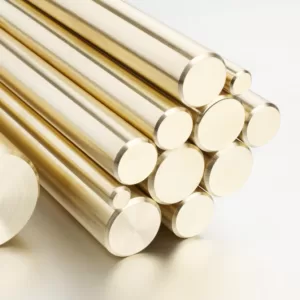
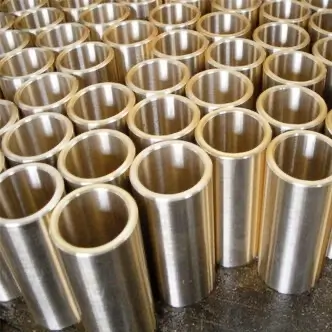
Originally referring to the alloy of copper and tin, bronze later encompasses copper alloys other than brass and nickel silver, often prefixed with the name of the primary additive element.
Classification and Applications of Bronze
Tin Bronze
Tin bronze is primarily composed of tin with copper as the main element. It exhibits excellent castability, friction reduction, and mechanical properties, making it suitable for manufacturing bearings, worm gears, and gears.
Special Bronzes (Non-Tin Bronzes)
Lead Bronze
Lead bronze is widely used in modern engines and grinding machines as bearing material.
Aluminum Bronze
Aluminum bronze boasts high strength, excellent wear resistance, and corrosion resistance, making it ideal for casting high-load gears, bushings, and marine propellers.
Phosphor Bronze
Phosphor bronze has a high elastic limit and good conductivity, suitable for manufacturing precision springs and electrical contact components.
Beryllium Bronze
Beryllium bronze is also used to manufacture spark-free tools for applications such as coal mines and oil depots.
Representation Method
The representation method is “Q + symbol and mass fraction of the primary additive element + mass fraction of other elements.” For cast products, the symbol is prefixed with “Z,” such as Qal7 indicating 5% aluminum content with the rest being copper in aluminum bronze. ZQsn10-1 indicates 10% tin content and 1% content of other alloying elements.
Properties
Tin Bronze
When the tin content is less than 5-6%, tin dissolves in copper to form an α solid solution, increasing ductility. When the tin content exceeds 5-6%, a Cu31sb8-based solid solution appears, leading to a decrease in tensile strength. Therefore, the tin content in tin bronze is mostly between 3-14%. Tin bronze with less than 5% tin content is suitable for cold deformation processing, while 5-7% tin content is suitable for hot deformation processing. When the tin content exceeds 10%, it is suitable for casting. Due to the similar electrode potential of α and β phases and the formation of a dense tin dioxide film after tin nitrides, the corrosion resistance against atmospheric and seawater increases, albeit with poor acid resistance. Tin bronze has a wide crystallization temperature range, poor fluidity, and is less prone to shrinkage cavities but tends to exhibit dendritic segregation and dispersed shrinkage cavities, making it suitable for casting complex-shaped components with large wall thicknesses but unsuitable for casting parts requiring high density and good sealing.
Tin bronze exhibits good friction reduction, magnetic resistance, and low-temperature toughness.
Tin bronze can be divided into two main categories based on production methods: pressure-processed tin bronze and cast tin bronze.
Pressure-processed Tin Bronze
With a tin content generally less than 8%, it is suitable for cold and hot pressure processing into plates, strips, rods, tubes, etc. After processing hardening, its tensile strength and hardness increase while ductility decreases. Annealing can maintain high tensile strength while improving ductility, especially obtaining high elastic limits.
It is suitable for producing corrosion-resistant and wear-resistant parts for instruments, elastic components, magnetic components, and sliding bearings and bushings in machinery.
Common types include Qsn4-3 and Qsn6.5~0.1.
Cast Tin Bronze
Supplied in ingots, it is cast into parts in foundries, suitable for casting complex-shaped but not highly dense components such as sliding bearings and gears.
Common types include ZQsn10-1 and ZQsn6-6-3.
Special Bronzes
By adding other elements to replace tin or as non-tin bronzes, most special bronzes exhibit higher mechanical properties, wear resistance, and corrosion resistance compared to tin bronze. Common examples include aluminum bronze (QAL7, QAL5) and lead bronze (ZQPB30).
Copper-based alloys with nickel as the main additive element exhibit a silver-white color and are called nickel silver. Nickel content usually ranges from 10%, 15%, to 20%, with higher content resulting in a whiter color. Binary copper-nickel alloys are termed ordinary nickel silver, while copper-nickel alloys containing manganese, iron, zinc, and aluminum are called complex nickel silver. Adding nickel to pure copper significantly improves its strength, corrosion resistance, electrical resistance, and thermoelectric properties. Industrial nickel silver is divided into structural and electrical types based on performance characteristics and applications, catering to various corrosion resistance and special electrical and thermal properties.